About the Town of Colonie
The most populous suburb of Albany and one of the region’s key population and transportation hubs.
 53°F
53°F
Overview
Quick Facts
- County: Albany County, New York
- 2020 Population: 85,590
- Location: Just north of the City of Albany
- Area: Third largest town in Albany County
- Villages: Village of Colonie, Village of Menands
Colonie is a town in Albany County, New York. It is the most populous suburb of Albany and the third largest town in the county by area, occupying roughly 11% of Albany County. Several distinct hamlets and neighborhoods exist within the town, contributing to its mix of residential, commercial, and industrial areas.
The town lies directly north of the City of Albany and forms the northern border of the county. Within the town are two incorporated villages: one also named Colonie and the other known as Menands.
As of the 2020 census, Colonie had a total population of 85,590, reflecting decades of suburban growth and development.
The town’s name is derived from the Dutch word Colonye or “Colonie,” referring to the historic Colonie of Rensselaerswyck. During the Dutch and early English periods, all land outside the Village of Beverwyck (now the City of Albany) was often referred to simply as the “Colonie.” This early usage reflects Colonie’s long-standing connection to Albany’s growth and to the larger history of settlement along the Hudson River.
Explore Colonie
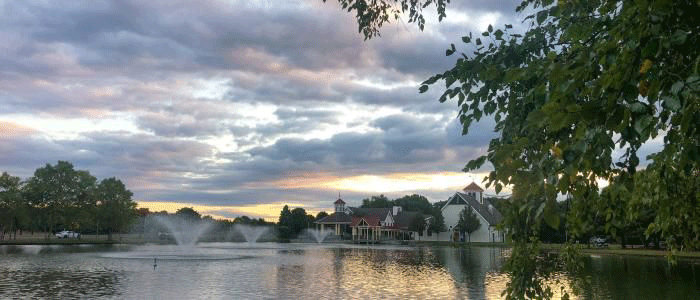
Colonie blends suburban neighborhoods, historic sites, and major transportation corridors.
Photo above is of the Crossings of Colonie
History
The area that is now the Town of Colonie was once part of the vast Rensselaerwyck manor. Later, it belonged to the original Town of Watervliet, which historically encompassed nearly all land in Albany County outside the City of Albany.
The Town of Colonie was officially formed in 1895, after rural residents of Watervliet opposed a state proposal to transform the entire town into the City of Watervliet. As part of this restructuring:
- The town of Colonie was created from the rural portions of Watervliet.
- The town and village of Green Island were separated in 1896.
- The remaining village of West Troy became the present-day City of Watervliet.
Debts from the original Town of Watervliet were divided proportionally among Green Island, Watervliet, and Colonie, and several related lawsuits worked their way through the courts. Because so many of today’s municipalities originated from it, the old Town of Watervliet is often remembered as the “mother of towns” in Albany County.
The central portion of Colonie was once home to extensive Shaker community farms. The Watervliet Shaker Historic District, located in Colonie, preserves part of that history. Much of the former Shaker land is now occupied by the Albany International Airport.
Through the early 20th century and into the 1930s, Colonie remained largely rural, with extensive farms and only a few small hamlets.
Suburban Growth & Modern Development
After World War II, Colonie experienced rapid suburban development, initially along the corridor linking Albany and Schenectady, and soon throughout the entire town. By around 1980, suburban development had effectively saturated much of the community.
The construction of major highways — including I-87, I-787, U.S. Route 9, and New York Route 7 — dramatically reshaped the town’s landscape, economy, and patterns of daily life. The Colonie of the 1990s and beyond is a very different community from the agricultural town of the 1930s and 1940s.
The Village of Colonie
The Village of Colonie is an incorporated village located within the Town of Colonie in Albany County, New York. The village had a population of 7,781 at the 2020 census.
Both the Town of Colonie and the Village of Colonie lie north of the City of Albany, the capital of New York State.
The village was incorporated on March 2, 1921, at a time when development was still relatively limited. Early growth was concentrated along the Albany–Schenectady Road (NY Route 5), with buildings and businesses lining the corridor.
The village fire department was established in 1931, further defining the village’s identity and community services.
Source Wikipedia